
Welding & Metal Fabrication Training in Uganda
Welding and metal fabrication are essential industrial skills that form the backbone of construction, automotive repair, manufacturing, and mechanical engineering. Welding focuses on joining metals using heat, while metal fabrication involves cutting, bending, shaping, and assembling metal structures and components.
Together, these two skills allow technicians to create everything from gates, doors, trailers, tanks, frames, machinery parts, steel structures, and custom metal products.
With proper training, what may appear as a complex and hazardous process becomes an exciting, creative, and highly employable craft.
Our Welding & Metal Fabrication Training Course is designed to equip learners with both technical mastery and professional confidence in just 8–10 weeks.
No prior experience is required just commitment, interest, and the willingness to learn a highly marketable trade. We welcome beginners seeking hands-on exposure, technicians wishing to upgrade their skills, and individuals preparing for industrial employment.
The course combines theoretical knowledge with extensive practical sessions to ensure that trainees gain real-world competence. You will work closely with qualified, experienced instructors who guide you through every step of the process from understanding welding machines and cutting tools to designing and fabricating complete metal projects.
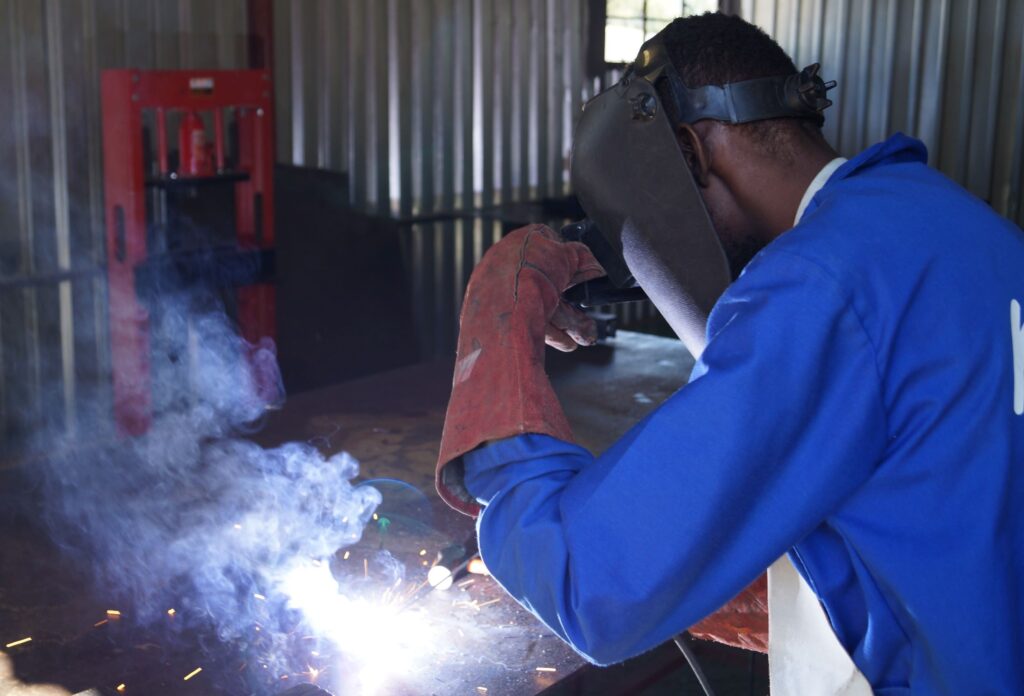
Whether you aim to become a workshop technician, industrial welder, structural fabricator, or self-employed metal worker, this course gives you a strong foundation.
Welding & Metal Fabrication FAQ
How long does it take to learn Welding & Metal Fabrication in Uganda?
You can complete a comprehensive welding and metal fabrication course within 8 to 10 weeks at institutions such as NexGen.
The duration allows enough time for safety training, equipment handling, welding techniques, metal-cutting practice, bending operations, design interpretation, and real project fabrication.
What does a welding and fabrication technician do?
A welding and fabrication technician is responsible for creating, maintaining, and repairing metal structures. Their duties include cutting metal, reading engineering drawings, performing different welding techniques, assembling components, inspecting joints, and ensuring quality and structural integrity.
They work in construction sites, workshops, factories, automotive garages, manufacturing plants, and steel structure industries. The job requires accuracy, creativity, safety awareness, and physical strength, as fabricators often work with heavy materials and specialized tools.
Is welding and metal fabrication difficult to learn?
At first glance, welding flames, metal sparks, and cutting machines may seem intimidating. However, with structured training, proper supervision, and regular practice, the skills become manageable and even enjoyable.
Many learners find satisfaction in turning raw metal into functional, strong, and beautifully finished products. Mastery comes from understanding metal properties, practicing correct techniques, maintaining safety discipline, and handling equipment confidently.
Welding & Metal Fabrication Techniques
During training, learners are introduced to the most common welding techniques used across industries:
1. Shielded Metal Arc Welding (SMAW / Arc Welding)
This method uses an electric current and a consumable electrode coated with flux. As the electrode melts, it fuses with the metal and forms a protective slag.
Advantages: simple, portable, ideal for outdoor work.
Applications: construction, maintenance, pipelines.
2. Gas Metal Arc Welding (GMAW / MIG Welding)
Uses a continuously fed wire electrode and shielding gas.
Advantages: clean welds, faster, great for beginners.
Applications: automotive work, sheet metal fabrication.
3. Gas Tungsten Arc Welding (GTAW / TIG Welding)
Uses a non-consumable tungsten electrode and manual filler rod.
Advantages: high-precision welds.
Applications: stainless steel works, aerospace, delicate fabrication.
4. Oxy-Acetylene Welding & Cutting
Uses oxygen and acetylene flame for cutting metals or welding light materials.
Advantages: versatile, useful for cutting, heating, brazing.
Applications: automotive repair, metal cutting in fabrication.
5. Metal Fabrication Processes
Learners also practice core fabrication operations such as:
• Metal measurement and marking
• Metal cutting (manual & automatic)
• Bending and shaping
• Grinding and finishing
• Drilling and fastening
• Assembly and structural layout