A road is never just a road, an industrial park is never just a collection of buildings, and an airport does not begin with a runway.
Long before people drive across newly completed highways or walk through modern terminals, there is a period when the landscape is dominated by earthworks, steel, dust, gravel and machines. Somewhere in that early stage, heavy machinery operators are already doing the work that makes the finished project possible.
That raises an important question for anyone considering this career: where are heavy machinery operators most needed in Uganda today, and which parts of the country are creating the strongest opportunities?
The answer is broader than Kampala or the traditional construction sites. Uganda’s expanding road network, oil and gas developments, industrialization, urban construction, agriculture and major transport projects are creating demand for people who can operate machinery with accuracy, discipline and safety awareness.
The Ministry of Works and Transport has also recently emphasized safety, professionalism and continuous skills development among equipment operators, showing that the industry is not simply looking for people who can move a machine, but people who can operate it responsibly.
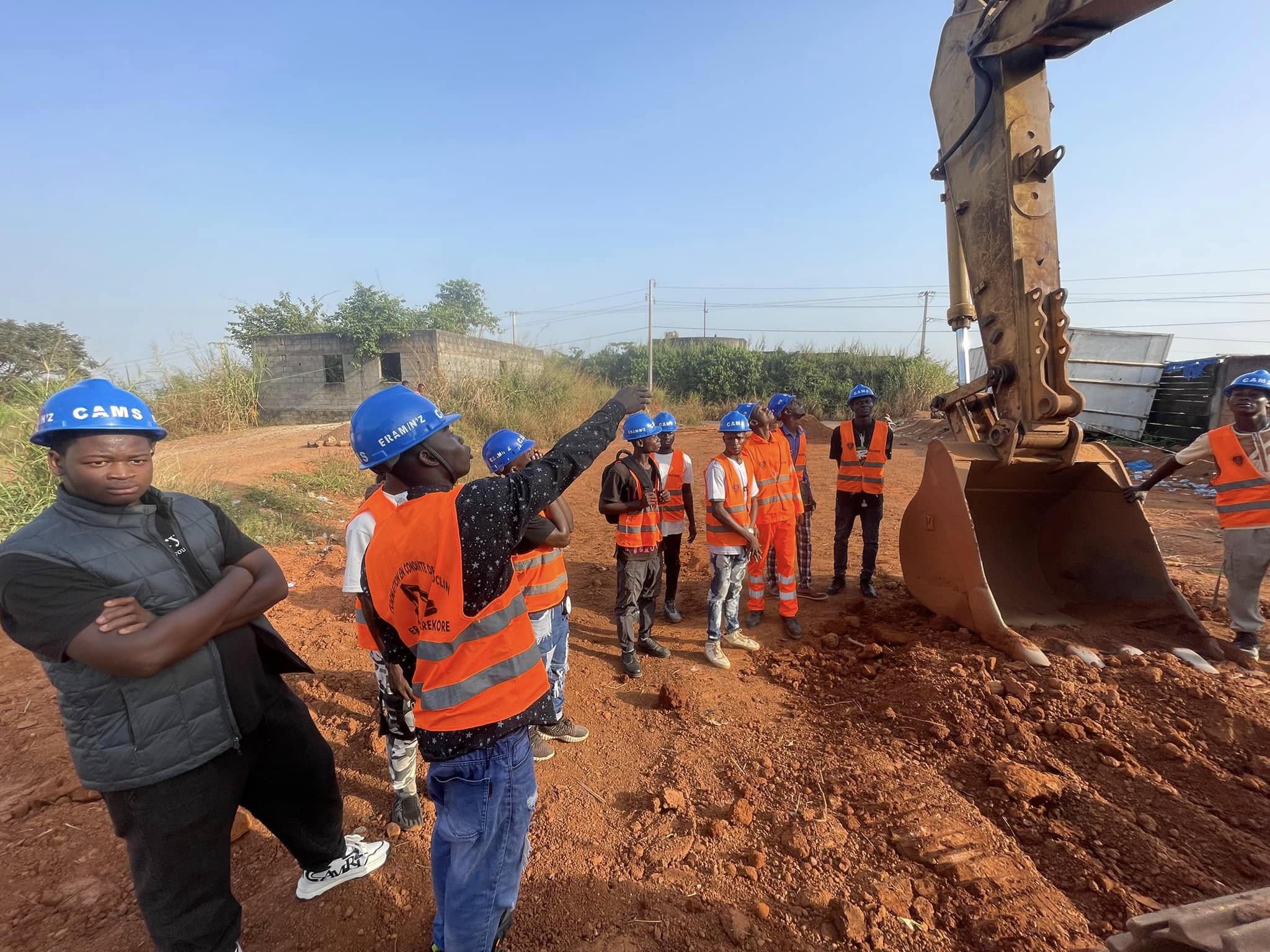
Now, where exactly are heavy machinery operators needed?
Road construction is one of the biggest opportunities
If you want to understand where heavy machinery operators are needed, start by looking at the roads connecting Uganda’s towns, districts and economic centers.
Road construction involves an entire sequence of machine operations. Excavators clear and dig, bulldozers push and spread material, graders establish accurate road profiles, rollers compact surfaces, wheel loaders handle aggregates and dump trucks move materials between different sections of a project.
That means a single road project can require several types of operators rather than one person operating one machine throughout the entire construction process.
Uganda’s 2026/27 infrastructure plans continue to priorities road and railway development, with substantial public funding directed toward transport infrastructure.
The Ministry of Works and Transport has also identified continued construction, upgrading and maintenance of national, district, urban and community access roads as key priorities.
For an aspiring operator, this matters because road construction does not depend on one large project. It creates opportunities across different regions as roads are upgraded, expanded, maintained and newly constructed.
Kampala and the Greater Urban Construction Market
Kampala presents a different kind of opportunity. The city’s constant expansion has created demand for construction equipment on commercial buildings, drainage works, road improvements, residential developments, industrial facilities and other urban projects.
Unlike a major highway project operating in a relatively open area, urban construction often requires operators to work within restricted spaces where precision becomes extremely important.
An excavator working beside an existing building, for example, cannot simply operate with the same freedom as one working on an undeveloped site. The operator must understand the surroundings, respond to other workers and equipment, and make controlled movements.
This is where skilled heavy machinery operators can distinguish themselves from people who have only learned basic machine controls.
Urban development also creates demand beyond the large contractors.
Smaller construction companies, equipment-hire businesses and specialized subcontractors can require operators for shorter projects, creating another part of the employment market.
The Albertine region and Oil-related construction
Move away from Kampala towards western Uganda and another major story becomes visible: the infrastructure surrounding the country’s oil and gas sector.
The Albertine region has experienced significant construction activity associated with roads, oil facilities, logistics, camps and supporting infrastructure.
As of July 2026, Total Energies reported that construction activities connected to the Tilenga project were continuing across areas including facilities, roads, flowlines and drilling operations.
This creates an environment where heavy machinery operators can be required for excavation, road preparation, earthmoving, site development, material handling and other construction activities.
The important point, however, is that oil-related work can demand a particularly high level of professionalism. Operators may have to work within strict site procedures, safety systems and project requirements, meaning technical ability alone may not be enough.
Someone entering this sector should therefore think beyond simply learning how to control an excavator or bulldozer. Safety, communication, machine inspection, environmental awareness and the ability to follow site procedures can become equally important.
Industrial parks are creating another market for operators
Uganda’s industrialization is also creating work for machinery operators, although this area is sometimes overlooked when people talk about construction careers.
Industrial parks require roads, drainage systems, foundations, utilities, warehouses and other infrastructure before factories can begin full operations. Heavy equipment is involved throughout those early stages.
A recent example is the Kabalega Industrial Park in Hoima, where the National Enterprise Corporation and Uganda National Oil Company signed a contract for initial road infrastructure valued at UGX 10.3 billion. The project is intended to support future oil, petrochemical and manufacturing investment in the area.
Projects of this nature demonstrate why operators should not limit their thinking to traditional building construction. The industrial economy creates its own machinery requirements, and as industrial zones develop, opportunities can extend into construction, logistics, material handling and equipment maintenance.
Agriculture is an often-overlooked opportunity
When people hear the words heavy machinery operators, they often think about highways and buildings, but Uganda’s agricultural sector also depends increasingly on mechanization.
Large-scale farming operations may require tractor operators, loaders and other equipment personnel for land preparation, material movement, grading and related activities.
Agricultural machinery work can be different from construction because the operating environment changes with seasons, crops, terrain and farm requirements.
Nevertheless, the same principle applies: employers need people who understand the machine and can use it productively without unnecessary damage or downtime.
For someone developing a machinery career, agricultural equipment can therefore represent an additional path rather than limiting their opportunities to construction sites.