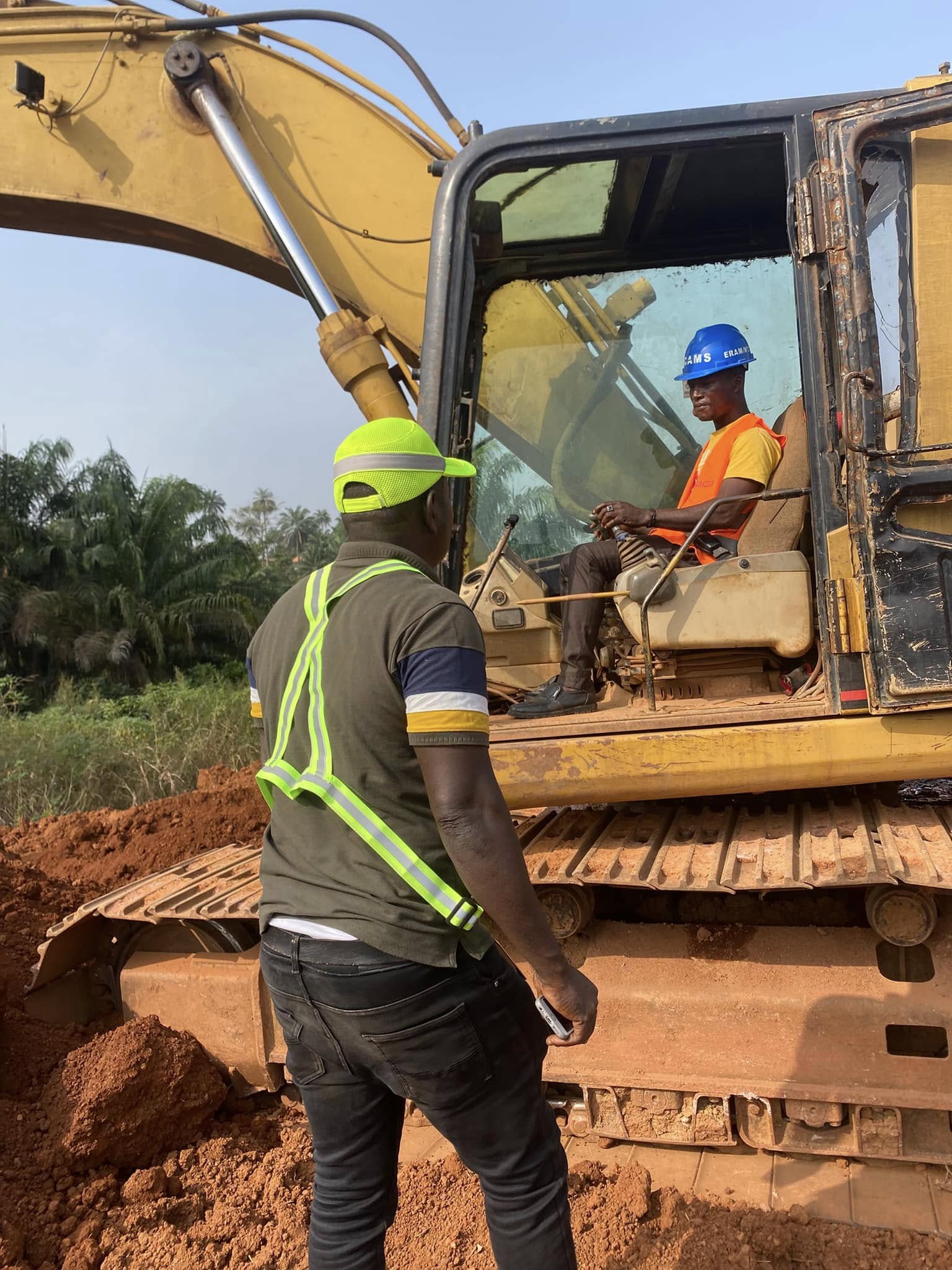
There will always be a time you as an operator you climb into the excavator, start the engine and prepare to move toward the area where you have been assigned to work.
The machine is ready, the ground looks clear and there seems to be enough space to begin. But before you move, there is one question you should answer: do you really understand the site layouts?
A construction site can look straightforward from the operator’s seat while hiding important details that can affect your work. There may be a trench ahead, a temporary access road behind you, workers moving between different sections, trucks waiting to load and underground services that you cannot see from the surface.
If you start operating without understanding how these areas connect, even a simple movement can become a safety problem.
This is why site layouts are more than drawings pinned inside a site office. They help you understand where you are working, where your machine should move and what you need to watch before, during and after every operation.
Once you learn to read them properly, you stop looking at the construction site as just an open space and start seeing it as an organized working environment.
What are you actually looking at?
When someone shows you a site plan, you should not simply look at it and wait for instructions. Take time to understand what it is telling you.
Site layouts can show access roads, working areas, material storage points, buildings, trenches, pedestrian routes, machine positions and restricted sections of the project.
For example, if you are operating a wheel loader, you need to know where material is being collected, where trucks will arrive and which route you will use to move between the two points.
If you are operating an excavator, you need to understand where excavation will take place and whether there are nearby workers, machines, structures or services that could affect your operation.
The more clearly you understand the arrangement of the site, the easier it becomes to position your machine correctly.
What happens when you ignore the plan?
Picture yourself operating an excavator on a busy project. You have been told to dig along one side of the site, but you notice an open area behind you that appears to provide an easier route. You reverse toward it without checking what is shown on the plan. Did you as well understand that;
- A worker may be using that route.
- A delivery truck may be approaching.
- There could be a trench or soft ground that you cannot clearly see from the cab.
The problem is not necessarily that you cannot operate the excavator. The problem is that you moved without understanding the environment around it.
Good site layouts reduce this uncertainty by showing how different parts of the project are supposed to work together. They help you think before you move rather than reacting after something goes wrong.
How does the layout affect your machine?
Every machine needs space to operate safely. An excavator needs enough room for its upper structure to swing. A wheel loader needs turning space. A grader needs a clear working path, while a bulldozer may need room to push material and change direction.
This is where site layouts become useful during everyday operation. They help you understand where your machine should enter, where it should work and where it should leave when the task is complete.
Before starting, consider your route and ask yourself whether another machine will need to use the same space. Think about where people are likely to walk and whether your machine will block an access route. A few minutes of planning can save considerable time later.
What hazards should you look for?
A good operator does not only look directly ahead. You need to understand what could affect your machine from different directions.
Check for overhead power lines, underground services, unstable ground, steep slopes, trenches, structures and moving vehicles.
Excavation work deserves particular attention because underground utilities may not be visible from the surface, while workers can also be exposed to hazards around open excavations.
OSHA’s construction guidance highlights the importance of identifying hazards around excavation and heavy equipment before work begins.
Site layouts can help you identify some of these hazards before you begin, but never assume that the drawing tells you everything. Always compare the plan with the actual conditions on the ground.