Types of Excavator Buckets Used their Applications
Have you ever imagined standing beside a busy construction site in Kampala as an excavator moves through the earth, lifting soil, shaping foundations, and preparing land for a new building?
At first glance, it may seem like the excavator itself is responsible for all this work. However, the real secret behind the machine’s ability to handle different tasks lies in one important attachment known as the bucket.
Across Uganda, excavators are becoming increasingly important in road construction, real estate development, mining, agriculture, drainage improvement, and infrastructure projects.
However, not every excavation task requires the same attachment. The type of work being done determines the kind of bucket needed.
This is why understanding excavator buckets is essential for you as an operator, contractor, and anyone interested in the heavy equipment industry.
Excavator buckets are designed for specific applications, and choosing the right one can improve productivity, reduce fuel consumption, minimize machine wear, and help projects achieve better results within a shorter time.
Whether you’re digging foundations in Kampala, working in a quarry in Kasese, or preparing agricultural land in eastern Uganda, having knowledge of different bucket types makes a significant difference.
If you’re pursuing a career in heavy machinery operation, understanding attachments is just as important as learning machine controls.
Modern employers are looking for operators who can do more than moving a machine. They want professionals who understand how equipment works and how to maximize performance on different job sites.
Why excavator buckets are Important in Uganda’s construction industry
Uganda’s construction sector continues to grow, with new roads, residential buildings, commercial projects, and industrial developments emerging every year. As these projects increase, the demand for skilled excavator operators and efficient equipment continues to rise.
However, the effectiveness of an excavator depends greatly on selecting the correct attachment. Using the wrong bucket can slow down operations, increase fuel consumption, damage the machine, and reduce the quality of work.
For example, a bucket designed for normal soil excavation may struggle when used in a rocky quarry environment. Similarly, a large digging bucket may not provide the precision required when creating narrow trenches for water pipes or electrical cables.
This is why professional training institutions such as Next Gen Institute of Technology emphasize practical understanding of excavators, attachments, and real working conditions.
As a skilled operator, you should understand not only how to control the machine but also how different attachments affect performance.
Below are some of the different types of excavator buckets used and their applications
General purpose excavator bucket
The general purpose bucket is one of the most commonly used excavator buckets in Uganda. As the name suggests, it is designed for a wide range of everyday excavation activities.
This bucket is commonly used for:
- Digging building foundations.
- Moving loose soil.
- Preparing construction sites.
- Loading materials.
- General earthmoving activities.
As an operator or contractor, you may prefer this bucket because of its flexibility. It performs well in normal soil conditions and is suitable for residential construction, commercial buildings, and general site preparation.
If you’re a beginner operator, learning how to effectively use a general-purpose bucket is often one of the first steps toward becoming confident with excavator operation.
Rock bucket
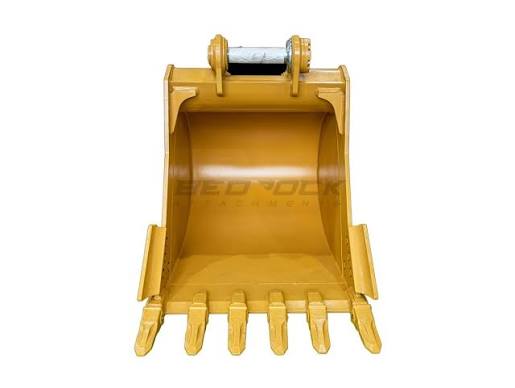
Uganda has several areas where construction activities involve rocky terrain. In locations such as Kasese, Tororo, and parts of Karamoja, excavation work may involve breaking through hard materials that require stronger attachments.
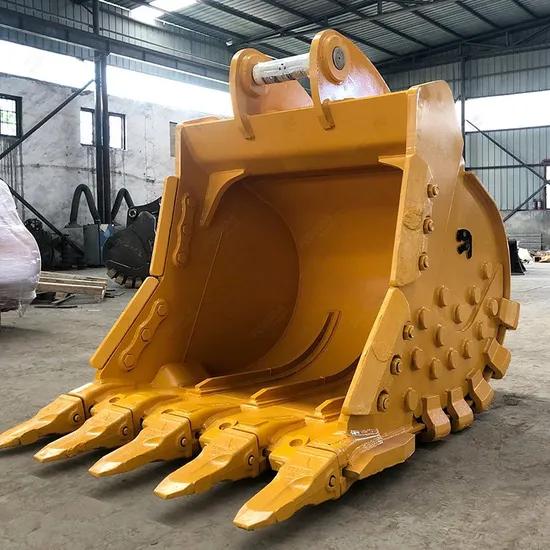
A rock bucket is one of the heavy-duty excavator buckets designed specifically for these challenging conditions. It features reinforced steel, stronger side plates, and durable bucket teeth that allow it to handle rocks, gravel, and compacted materials.
Rock buckets are commonly used in:
- Quarry operations.
- Mining activities.
- Road construction.
- Hard ground excavation.
If you do use a standard bucket in rocky environments, it can result in faster wear and frequent repairs. A rock bucket provides the strength needed to work efficiently in demanding conditions.
Trenching bucket
Construction projects often require precise digging rather than large-scale excavation. This is where trenching buckets become valuable.
Unlike wider excavator buckets, trenching buckets are narrow and designed to create clean, accurate trenches. They are commonly used for:
- Water pipeline installation.
- Sewer systems.
- Electrical cable installation.
- Fibre optic network projects.
With Uganda experiencing continued urban expansion, trenching work has become increasingly important.
If you’re an operator who understands how to use trenching buckets, you can contribute to utility projects where accuracy and careful operation are required.
Heavy duty excavator bucket
Heavy duty buckets are designed for tougher working environments where standard buckets may not provide enough strength.
These excavator buckets are commonly used for:
- Compact clay soils.
- Gravel excavation.
- Large construction projects.
- Industrial developments.
Their reinforced design allows them to withstand continuous operation under demanding conditions.
If you’re to be working on major infrastructure projects, you will often rely on heavy-duty buckets because they provide durability and reliability.
Ditch cleaning bucket
Drainage systems play a major role in Uganda, especially in urban areas where heavy rainfall can create flooding challenges.
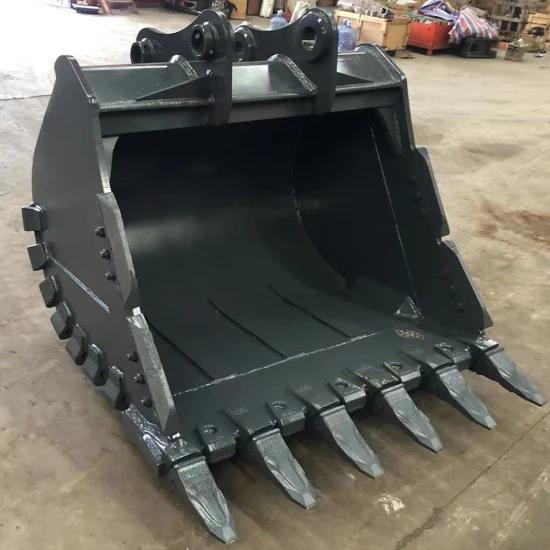
Ditch Cleaning Buckets are designed specifically for maintaining drainage channels, canals, and waterways.
Unlike digging buckets, these attachments are wider and smoother, allowing operators to clean and shape channels effectively.
They are useful in:
- Road drainage projects.
- Irrigation schemes.
- Wetland management.
- Flood prevention projects.
A skilled operator using the correct bucket can complete drainage work faster while creating better finishing results.
Grading bucket
After excavation is completed, many projects require finishing work to create smooth and level surfaces. Grading buckets are designed for this purpose.
These excavator buckets are commonly used for:
- Road finishing.
- Landscaping.
- Site levelling.
- Slope preparation.
They allow operators to achieve greater accuracy, especially when preparing areas before paving, construction, or landscaping.
Skeleton bucket
Skeleton Buckets are unique because they have spaces between the steel bars that allow smaller materials to pass through while retaining larger objects.
They are useful for:
- Separating rocks from soil.
- Landscaping projects.
- Demolition activities.
- Recycling operations.
In Uganda, these buckets can be valuable in projects where material separation is required before reuse or disposal.
V Bucket
The V bucket has a special design that allows operators to create narrow channels with precision. It is commonly used in drainage and water management projects.
These buckets are especially useful for:
- Irrigation channels.
- Cable trenches.
- Roadside drainage systems.
Their shape allows better control of water flow and reduces the need for additional finishing work.
Tilting bucket
Tilting buckets provide operators with additional flexibility because they can move sideways while attached to the excavator.
These excavator buckets are useful when working on:
- Slopes.
- Embankments.
- Landscaping projects.
- Uneven surfaces.
Instead of constantly repositioning the machine, as you’re operating, you can adjust the bucket angle to complete precise work more efficiently.
Ripper bucket
Some excavation sites contain extremely hard ground that ordinary buckets cannot penetrate effectively. A Ripper Bucket is designed to break through compacted surfaces before excavation begins.
It is commonly used in:
- Road construction.
- Rocky areas.
- Difficult ground preparation.
This attachment helps operators handle challenging conditions while reducing unnecessary strain on the excavator.