Finishing heavy machinery training can give you a satisfying feeling for the fact that you have spent weeks learning controls, understanding machine systems, practicing safety procedures and gradually becoming comfortable behind the controls.
Now here comes a very important question that begins to occupy your mind: what happens now?
One thing to note is that the certificate in your hands is not the end of your journey, in many ways, it is the point where your training has to turn into practical experience, professional discipline and eventually a career that you have learnt after heavy machinery training.
In Uganda, road construction, building projects, agriculture, logistics and infrastructure development continue to require skilled equipment operators.
For that case, completing training can open a pathway, but what you do after training determines how far that pathway takes you.
Here is a break through in how you can utilize your training.
Your certificate becomes your starting point
When you complete your course in heavy machinery training and successfully pass the required assessment, your certificate provides evidence that you have acquired particular skills and competencies, but you should understand exactly what that document represents.
It does not automatically mean that every employer will hire you immediately after your heavy machinery training, nor does it replace every license, permit or site-specific requirement that a particular employer or project may demand.
Uganda’s Directorate of Industrial Training explains that occupational assessment is about gathering evidence and judging whether a person has obtained the ability to perform tasks according to stipulated standards.
Its vocational qualification system provides different levels of certification based on demonstrated competence. This is why you should treat your certificate as a door opener rather than a finish line. NextGen Institute can as well help you and obtain this well recognized certificate.
Your next objective is to combine the qualification with practical experience, professional behavior and a reputation for safe machine operation.
The next step is looking for your first opportunity
After heavy machinery training, one of the biggest challenges is moving from a training environment into an actual workplace where production matters and the machine is part of someone’s business.
You may begin searching for opportunities with construction companies, road contractors, equipment-hire businesses, quarries, farms, warehouses, logistics companies and other organizations that use heavy equipment.
Your first position may not be your dream job, and it may not offer everything you imagined when you first enrolled, but an entry-level opportunity can give you something extremely valuable which is real working experience.
At this stage, employers are likely to look beyond your certificate and consider whether you understand safety, whether you can follow instructions, whether you inspect the machine properly.
They can as well check whether you respect other workers and whether you can operate without creating unnecessary damage or downtime.
The Ministry of Works and Transport recently emphasized safety, professionalism and continuous skills development when Uganda’s first cohort of simulator-trained heavy equipment operators completed a heavy machinery training. This really shows how important these qualities are becoming alongside technical ability.
Your first job is where your confidence is tested
There is a difference between operating a machine during training and operating one when your work affects an entire project. During training, your instructor can watch your movements, correct your mistakes and guide you through difficult situations.
On a real site, you will increasingly be expected to demonstrate judgement, awareness and consistency while still following the instructions of your supervisor.
This is where your first job can teach you things that a classroom cannot. You learn how different ground conditions affect machine movement, how experienced operators communicate with ground workers.
It further guides you on how production schedules influence machine use and why proper inspection and maintenance matter when equipment is expected to work for long hours.
You also begin discovering that professional operation is not about moving the machine as fast as possible, rather it is about completing the required work safely, accurately and efficiently.
You may need more practical experience
If you finish training and still feel nervous about operating independently, do not interpret that feeling as failure.
Heavy equipment has considerable size and power, and confidence should come from competence rather than from pretending that you know everything.
More supervised practice can help you become familiar with the machine’s controls, movements and responses before you take on more demanding responsibilities.
Uganda’s vocational training framework places significant emphasis on practical competence, and government information on vocational programs has highlighted practical learning using equipment similar to what trainees encounter in industry.
That practical mindset should continue after your graduation. Keep operating, keep observing experienced operators and keep improving your technique.
Your CV suddenly becomes very important as well
Once you have completed your heavy machinery training, you need a professional CV that communicates what you can actually do.
Instead of simply writing that you are a heavy machine operator, describe the specific machine you trained on, the practical skills you developed, your safety knowledge, relevant licenses or driving qualifications and any experience you have gained.
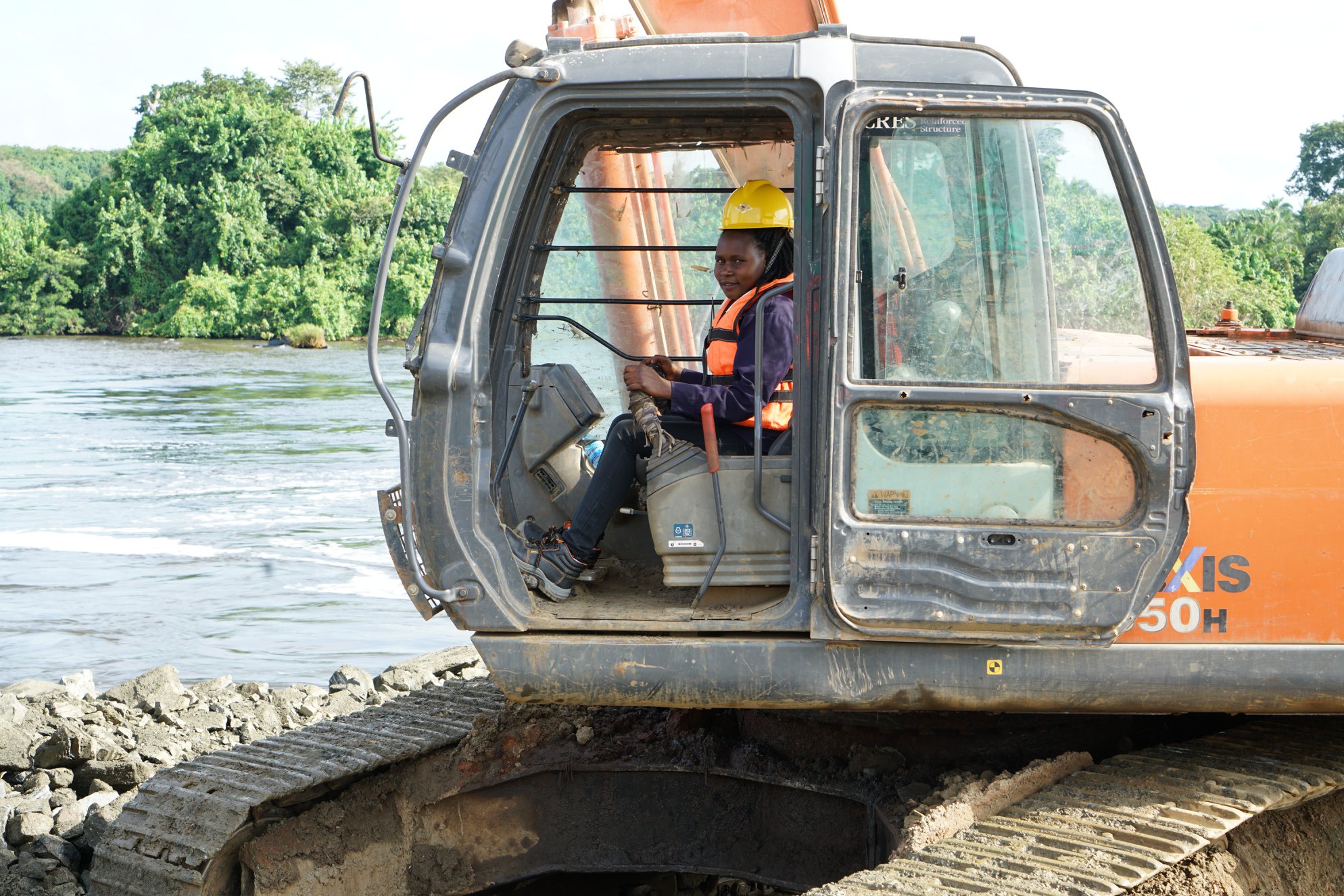
If you trained as an excavator operator, for example, your CV should make it immediately clear that you have practical exposure to excavator operation, site preparation, machine inspection, basic maintenance procedures and safe digging practices.
You should as well possess troubleshooting awareness, provided those are genuinely skills you acquired during your training. This gives an employer a much clearer picture of your capabilities than a certificate title alone.
You can start building experience on one machine
One of the smartest approaches after training is to become genuinely competent on the machine you have studied rather than immediately trying to collect certificates for every machine you see.
Did you know that mastery comes before accumulation? If you have trained as an excavator operator, concentrate on becoming a dependable excavator operator before rushing into another machine.
Once your confidence and experience have grown, you can consider adding another machine to your skill set. This can gradually increase your versatility and make you more useful to employers who need operators capable of working across different types of equipment.