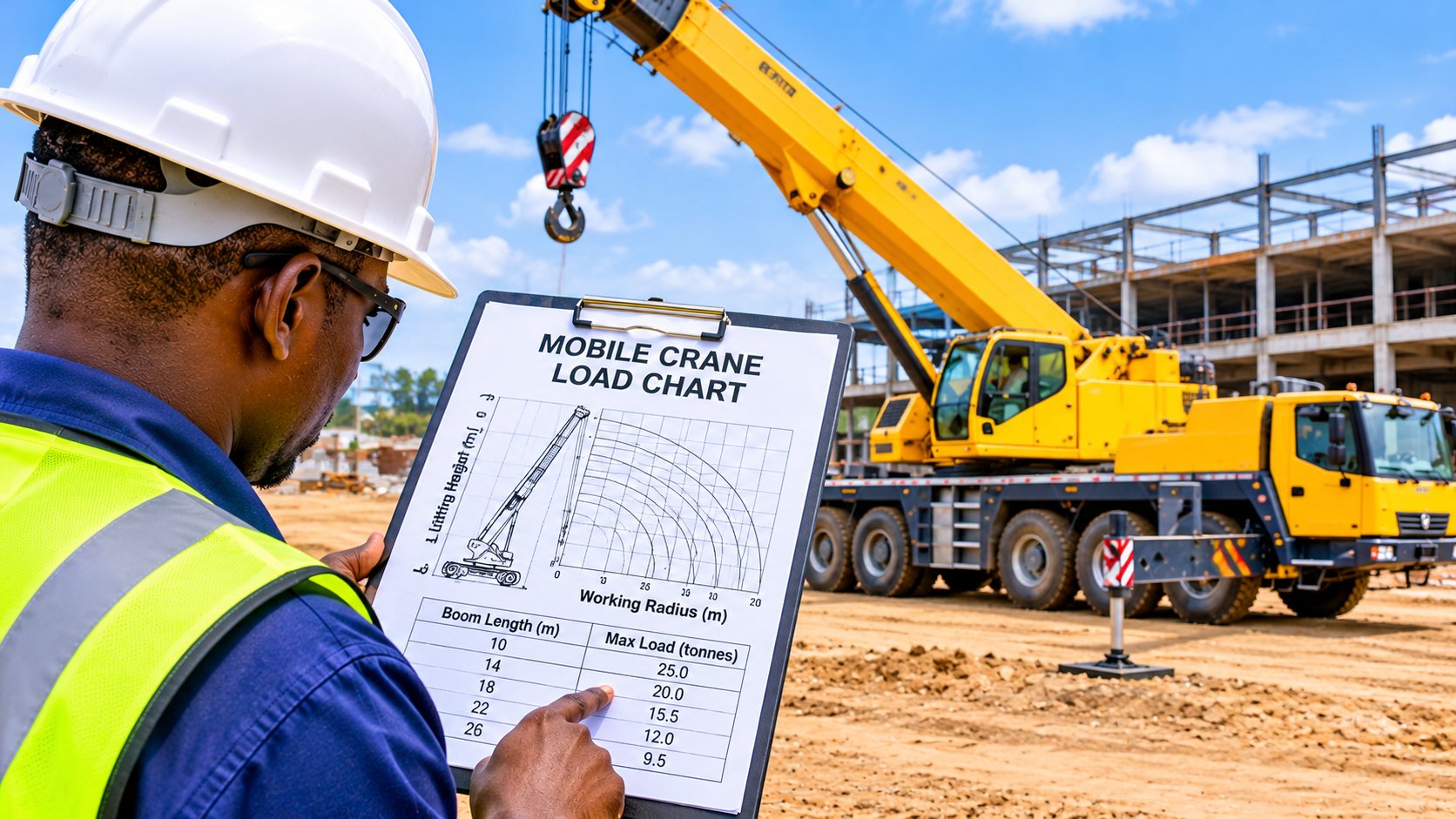
A mobile crane may be rated to lift several tonnes, but does that mean it can lift the same weight at every position on a construction site? Not quite.
A load that appears manageable when the boom is close to the crane can become dangerous when the lifting distance increases.
This is why operators must understand the Mobile Crane Load Chart before attempting any lifting operation.
The chart is more than a collection of numbers. It is the manufacturer’s guide to the crane’s permitted lifting capacity under specific working conditions.
Understanding how to interpret it helps operators make informed decisions, prevent overloading and carry out lifting operations safely.
Now let’s understand what a Mobile Crane Load Chart is
A Mobile Crane Load Chart is a document that shows the maximum permitted load a particular crane can lift at different boom lengths, working ranges and operating configurations.
The figures are not the same for every crane. They depend on the machine’s model, design and configuration.
A crane advertised as having a 50-tonne capacity, for example, may only achieve that rating under favorable conditions, such as a short working radius and the manufacturer’s specified setup.
As the boom extends and the load moves farther from the crane, its lifting capacity generally decreases.
Now as an Operator you must therefore identify the correct capacity rather than relying on the crane’s advertised tonnage.
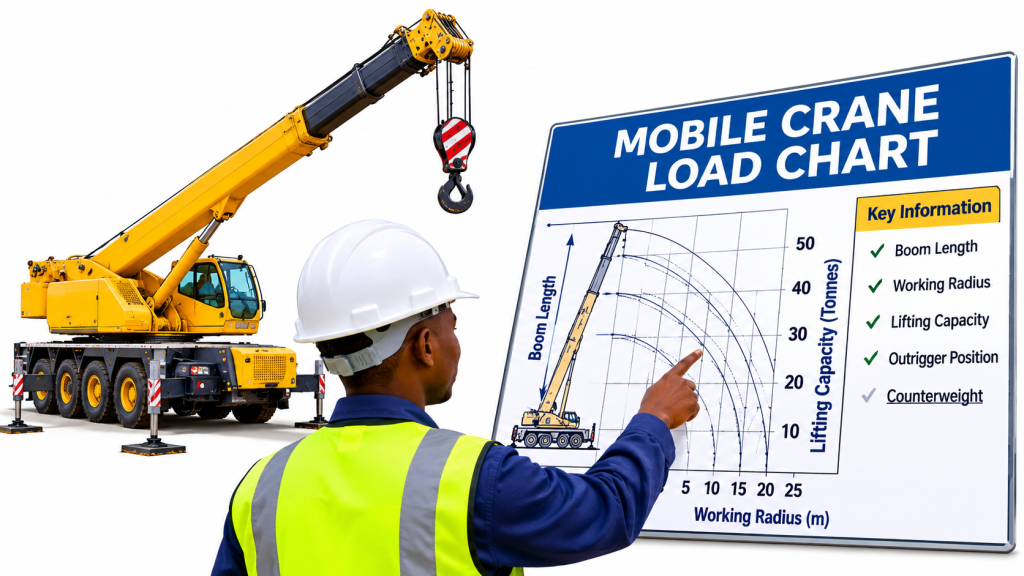
What key information is found on a Load Chart?
Now before using a Mobile Crane Load Chart, as a beginner you should understand the information it contains.
Working radius
The working radius is the horizontal distance from the crane’s center of rotation to the center of the suspended load.
It is one of the most important factors affecting lifting capacity. As the radius increases, the crane generally becomes less capable of lifting the same weight.
Boom length
This refers to the length of the crane’s main boom during lifting. Different boom lengths have different rated capacities.
As an operator you must identify the boom configuration that matches the actual lifting operation.
Lifting capacity
The capacity figures indicate the maximum permitted load for a particular combination of boom length, radius and crane configuration.
These values must be read from the correct section of the manufacturer’s chart.
Outrigger configuration
Outriggers provide additional support and stability when a mobile crane is positioned for lifting.
Some charts provide different capacities depending on whether the outriggers are fully extended, partially extended or in another approved position.
Now you as an operator you must use the section that matches the actual setup.
Counterweight and attachments
Counterweights help balance the crane during lifting. The load chart may also specify particular attachments, boom extensions or jib configurations.
Using a different arrangement from the one stated can change the crane’s permitted capacity.